
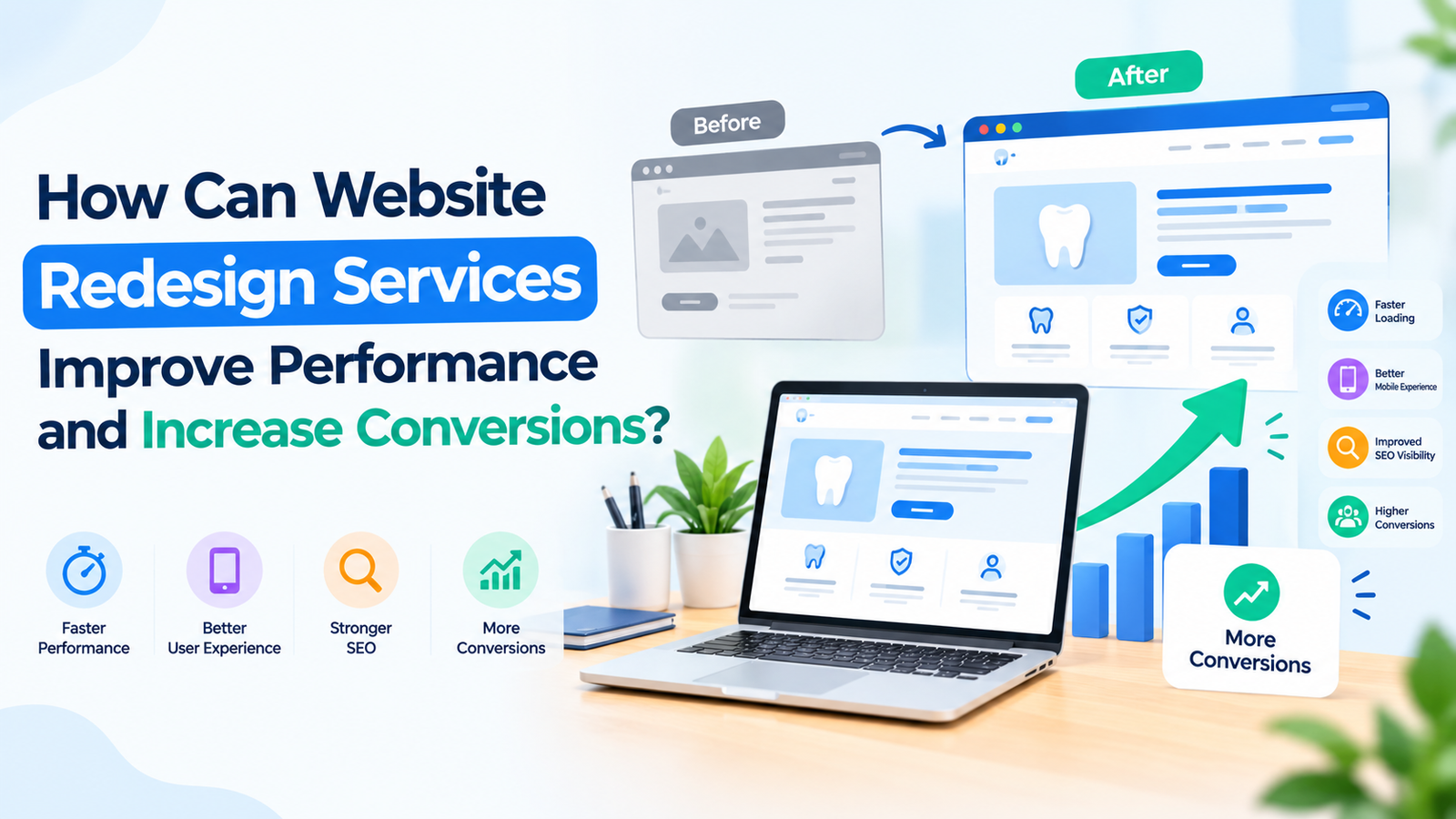
Your website is often the first place potential customers go to learn about your business. If the website is slow, difficult to navigate, outdated, confusing, or not optimized for mobile devices, visitors may leave before they understand what your business offers.
This is where Website Redesign Services can make a significant difference.
A website redesign is more than changing colors, images, fonts, or the layout of a few pages. A well-planned redesign looks at the complete user journey, website performance, mobile experience, content, navigation, SEO, calls to action, and conversion opportunities.
For businesses competing online, the goal should be to create a website that is useful for visitors and supports business objectives at the same time.
In this guide, we will explore how website redesign can improve website performance, user experience, SEO visibility, and conversions.
What Are Website Redesign Services?
Website Redesign Services involve improving an existing website’s structure, design, functionality, content presentation, user experience, and technical performance.
Depending on the condition and objectives of the existing website, a redesign may involve:
- Updating the website layout
- Improving navigation
- Making the website mobile-friendly
- Improving page loading performance
- Updating outdated content
- Improving calls to action
- Fixing technical issues
- Improving website accessibility
- Optimizing important pages for SEO
- Simplifying forms and contact processes
- Improving internal linking
- Updating images and visual elements
- Improving conversion paths
A redesign does not always mean rebuilding every page from scratch. Sometimes targeted improvements can solve major usability and conversion problems.
Why Does a Business Need a Website Redesign?
Websites can become outdated over time.
A website that worked well several years ago may not provide the same experience today. Technology changes, customer expectations evolve, competitors improve their websites, and search engines continue to develop.
Some common signs that a website may need redesigning include:
- The website looks outdated
- Visitors struggle to find information
- Pages load slowly
- The website performs poorly on mobile devices
- Important pages receive traffic but generate few enquiries
- Navigation is confusing
- Calls to action are unclear
- Website content is outdated
- The website is difficult to update
- Forms are complicated
- The design does not represent the current brand
- Organic search performance has declined
- Users leave important pages quickly
If several of these problems exist, a website redesign may be worth considering.
How Can Website Redesign Services Improve Performance?
1. Improve Website Loading Speed
Website speed can influence how users interact with a website.
When pages take too long to load, users may become frustrated and leave before the content appears. A redesign provides an opportunity to review technical elements that may be affecting performance.
These can include:
- Large image files
- Unnecessary scripts
- Excessive plugins
- Poorly optimized code
- Unused website elements
- Server-related limitations
- Improper caching
- Third-party resources
A redesign should therefore consider performance from the beginning rather than treating speed as an afterthought.
Google also provides Core Web Vitals as a way of measuring important aspects of real-world page experience, including loading performance, responsiveness, and visual stability.
2. Create a Better Mobile Experience
A large percentage of website visitors may access a business website using smartphones.
A website that looks good on a desktop computer but is difficult to use on a mobile device can create unnecessary friction.
A mobile-friendly redesign should consider:
- Responsive layouts
- Readable text
- Easy-to-use navigation
- Properly sized buttons
- Simple forms
- Fast-loading images
- Accessible menus
- Appropriate spacing
The objective is simple: visitors should be able to browse the website and take important actions without struggling.
3. Make Navigation Easier
Good navigation helps visitors find what they need.
Imagine someone visits a service website but cannot quickly determine:
- What services are offered
- Which service is relevant to them
- How to contact the business
- Where the business operates
- What makes the company different
Even a visually attractive website can lose potential customers if the information architecture is confusing.
A website redesign can organize pages into a clearer structure with logical menus, service categories, internal links, and prominent calls to action.
4. Improve User Experience
User experience, often called UX, covers how easily and comfortably visitors can use a website.
A good UX strategy considers the complete journey from the first page a visitor sees to the action the business wants them to take.
For example:
Search → Landing Page → Information → Trust Signals → Service → Call to Action → Enquiry
If there are unnecessary obstacles between these steps, visitors may leave.
A redesign can reduce friction by presenting important information at the right point in the user journey.
How Can Website Redesign Increase Conversions?
5. Create Clearer Calls to Action
A website should make it obvious what visitors can do next.
Depending on the business, calls to action may include:
- Request a quote
- Book a consultation
- Contact us
- Call now
- Get a free assessment
- View services
- Schedule an appointment
- Send an enquiry
A redesign can make these actions more visible without making the website feel overly promotional.
The key is to match the CTA with the visitor’s intent.
Someone reading an introductory blog may not be ready to request a quote immediately. A visitor on a detailed service page may be much closer to making an enquiry.
6. Improve Landing Pages
Not every website visitor arrives through the homepage.
Search engines, advertisements, social media, directories, and referrals can send users directly to specific pages.
This means individual service and landing pages need to work independently.
A strong landing page should quickly communicate:
- What the business provides
- Who the service is for
- What problem it addresses
- Important benefits or features
- Relevant supporting information
- Why visitors should consider the business
- What action they can take next
Website redesign services can help restructure these pages around user intent and business goals.
7. Simplify Contact Forms
Long or complicated forms can discourage enquiries.
If a business only needs basic information to begin a conversation, asking for too many details may create unnecessary friction.
A redesign can review:
- Number of fields
- Form placement
- Error messages
- Mobile usability
- Confirmation messages
- CTA wording
The objective should be to make the enquiry process straightforward while collecting the information the business genuinely needs.
8. Build Trust Through Better Website Content
People may hesitate to contact a business if the website does not provide enough information.
Trust can be supported through useful and accurate content such as:
- About information
- Service details
- Business experience
- Team information
- FAQs
- Client reviews where genuine
- Case studies where appropriate
- Contact information
- Business location
- Relevant certifications or qualifications where applicable
A redesign provides an opportunity to organize these elements so visitors can find them naturally.
9. Make the Website More SEO-Friendly
A website redesign should not focus only on visual design.
Technical SEO and on-page SEO should also be considered.
Important areas include:
- Page titles
- Meta descriptions
- Heading structure
- URL structure
- Internal linking
- Image optimization
- Structured data where appropriate
- Mobile usability
- Page speed
- Crawlability
- Indexability
- Canonicalization
- Redirects
This is especially important when an existing website already receives organic traffic.
Changing URLs without an appropriate migration and redirect strategy can cause avoidable SEO problems.
10. Improve Content Organization
A redesign can make useful content easier to discover.
For example, a business website might organize content into:
Services → Individual Service Pages → Supporting Guides → FAQs → Contact
This creates a logical relationship between commercial and informational pages.
Internal links can then help users and search engines understand how the content is connected.
Does Website Redesign Help SEO?
Yes, a properly planned redesign can support SEO, but a redesign itself does not automatically improve rankings.
The outcome depends on how the redesign is implemented.
A visually impressive website can still perform poorly in search if important SEO elements are removed or technical issues are introduced.
During a redesign, businesses should protect valuable existing pages and rankings by reviewing:
- Existing organic traffic
- High-performing pages
- Important keywords
- Existing backlinks
- Indexed URLs
- Search Console data
- Internal links
- Existing metadata
- Redirect requirements
This is why SEO should be involved before the new website goes live rather than after the redesign is complete.
What Should Be Considered Before Redesigning a Website?
Before starting a redesign, businesses should answer several questions.
What Is Not Working With the Current Website?
Look at analytics, search performance, user behavior, enquiries, and feedback.
Who Is the Target Audience?
The website should be designed around the needs and expectations of its actual users.
What Are the Main Business Goals?
The objective could be more enquiries, calls, bookings, sales, registrations, or another measurable action.
Which Pages Are Already Performing Well?
Do not remove valuable pages without understanding their SEO and business value.
What Are Competitors Doing Better?
Competitor research can reveal opportunities related to content, navigation, service presentation, and user experience.
What Should Be Improved Technically?
Review speed, mobile performance, security, crawlability, forms, broken links, and other technical factors.
Website Redesign vs. Website Refresh: What Is the Difference?
These terms are sometimes used interchangeably, but they can describe different levels of work.
A website refresh may involve relatively limited changes such as:
- Updated colors
- New images
- Typography changes
- Minor layout improvements
- Content updates
A website redesign is generally broader and may involve:
- New information architecture
- New page layouts
- UX improvements
- Technical changes
- Content restructuring
- SEO improvements
- Mobile optimization
- Conversion optimization
- New functionality
The right approach depends on the website’s current condition and business requirements.
Common Website Redesign Mistakes to Avoid
A redesign can create problems if it is approached only as a design project.
1. Focusing Only on Appearance
A beautiful website that is difficult to navigate or slow to load will not necessarily perform well.
2. Removing Valuable Pages
Existing pages may already generate organic traffic or backlinks.
3. Ignoring SEO During Migration
Changes to URLs, content, navigation, and technical settings can affect search visibility.
4. Using Too Many Design Elements
Animations, videos, pop-ups, and visual effects should have a purpose. Too many can distract users or affect performance.
5. Making Mobile Optimization an Afterthought
The mobile experience should be considered from the beginning.
6. Hiding Important Information
Visitors should not have to search extensively for services, contact details, pricing information where applicable, or other important details.
7. Forgetting to Measure Results
A redesign should have measurable objectives.
How Should You Measure the Success of a Website Redesign?
Website redesign success should not be measured only by whether the new website looks better.
Businesses can monitor metrics such as:
- Organic clicks
- Organic impressions
- Search rankings
- Organic traffic
- Engagement
- Conversion rate
- Form submissions
- Phone enquiries
- Online bookings
- Sales or leads
- Page speed
- Core Web Vitals
- Mobile performance
The most useful metrics depend on the business model.
For example, an e-commerce website may focus heavily on transactions and revenue, while a service business may prioritize qualified enquiries, calls, and consultation requests.
How Channelpro Communications Can Help With Website Redesign
For businesses looking for a structured approach to improving their website, Channelpro Communications – SEO Company Ahmedabad can combine website, SEO, content, and digital marketing considerations into a broader strategy.
A website redesign project can be approached around several areas, including:
- Website structure
- User experience
- Mobile responsiveness
- SEO
- Website content
- Conversion-focused design
- Technical performance
- Internal linking
- Landing pages
- Calls to action
The exact approach should be based on the business’s existing website, target audience, industry, competition, and goals.
Rather than redesigning a website simply because it looks old, businesses should identify specific problems and connect each change to a measurable objective.
Frequently Asked Questions About Website Redesign Services
How often should a business redesign its website?
There is no fixed schedule that applies to every business. A redesign may be appropriate when the website no longer meets user expectations, has technical limitations, performs poorly on mobile devices, or does not effectively support business objectives.
Can website redesign improve conversions?
Yes, a well-planned redesign can improve conversion opportunities by simplifying navigation, improving landing pages, strengthening calls to action, reducing friction, and presenting useful information more clearly. However, conversion improvements cannot be guaranteed because results depend on many factors.
Does redesigning a website affect Google rankings?
It can. Changes to website structure, URLs, content, internal links, technical configuration, and other elements can influence search performance. Proper SEO planning and migration practices can help reduce unnecessary risks.
Should SEO be done before or after website redesign?
SEO should be considered before and throughout the redesign process. Reviewing existing search performance before making major changes helps protect valuable pages and identify opportunities for improvement.
What are the most important elements of a high-performing website?
Important elements can include fast loading performance, mobile usability, clear navigation, useful content, strong technical foundations, accessible design, relevant SEO, trustworthy information, and clear conversion paths.
Final Thoughts
A website should do more than look modern. It should help visitors find information, understand the business, trust the brand, and take the next appropriate action.
This is why Website Redesign Services should focus on much more than visual changes.
A successful redesign brings together user experience, website performance, mobile usability, SEO, content, navigation, and conversion optimization. When these elements work together, a website can become a stronger digital asset for the business.
For companies planning a website redesign, the best starting point is to understand what is currently working, identify where visitors are facing difficulties, study business goals, and then build a redesign strategy around those findings.
With a data-informed approach, a website redesign can create a better experience for visitors while giving the business a stronger foundation for organic visibility, enquiries, and long-term digital growth.
Channelpro Communications – SEO Company Ahmedabad can help businesses approach website redesign from both a user-experience and search-visibility perspective, creating a website strategy that is aligned with business goals rather than design trends alone.